 admin
admin Why do we as a species love to collect and have collections and why do some objects have more meaning than others?
At first glance, the “Big Question” I chose to focus on seems a somewhat tame choice, where there may not be many ethical questions raised, but in actuality, there is always an ethical viewpoint that you can observe. I personally believe through my research that I have found that the ethical question raised is what is ethical to collect, and is it ethical to collect items that do not belong to your culture or background. many examples of this can be seen such as the collection of racist American memorabilia which infamously will portray negative black stereotypes and caricatures for the purpose of house decor, art, and trinkets. another example I would come across is the collection or possession of indigenous people’s artifacts in museums and personal collections of people who are not part of those communities. Preserving and collecting items for the purpose of cataloging and preserving history is important, there have been discussions on who can hold onto these items.
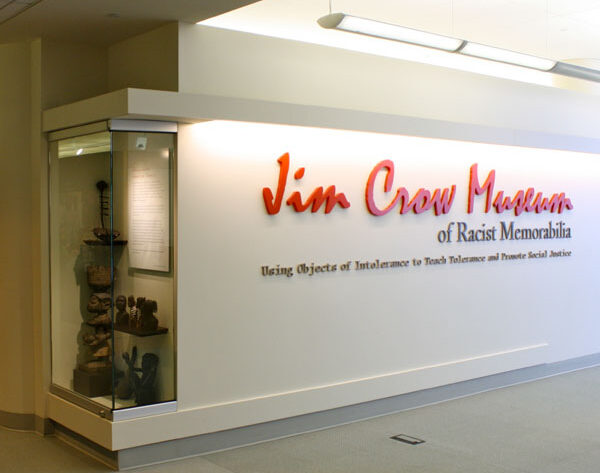
David Pilgrim, a curator at the Jim Crow Museum, in Big Rapids Michigan said about collecting racist objects, “I have long felt that Americans, especially whites, would rather talk about slavery than Jim Crow. All ex-slaves are dead. They do not walk among us, their presence a reminder of that unspeakably cruel system[…]The horrors of Jim Crow are not so easily ignored. The children of Jim Crow walk among us, and they have stories to tell.” he expresses the importance of not letting artifacts such as this be forgotten because when we forget these artifacts we forget the history behind them. it even can help us see how systemic racism has continued to this day, where patterns of stereotypes and caricatures can still be seen in our everyday lives. Pilgrim goes on to describe an encounter he had with another collector of racist objects, “On her walls was a material record of all the hurt and harm done to Africans and their American descendants. I wanted to cry. It was at that moment that I decided to create a museum.” A material record that will now not be forgotten because he has created a museum around his collection of objects.
He expresses that the pain and sadness that comes with seeing them and collecting these items it’s an important reminder of how recently these ideas were expressed. He says it is more important to educate about the current state and history of racism than turn a blind eye to the pain that African Americans have suffered. Pilgrim expressed his disdain for his own collection when saying “Most collectors are soothed by their collections; I hated mine and was relieved to get it out of my home. I donated my entire collection to the university, with the condition that the objects would be displayed and preserved.” it is also important to note that there are items in the collection that are from post Jim Crow era showing that this collection will most likely keep growing as these issues are not a thing of the past and they continue to be prevalent to this day.
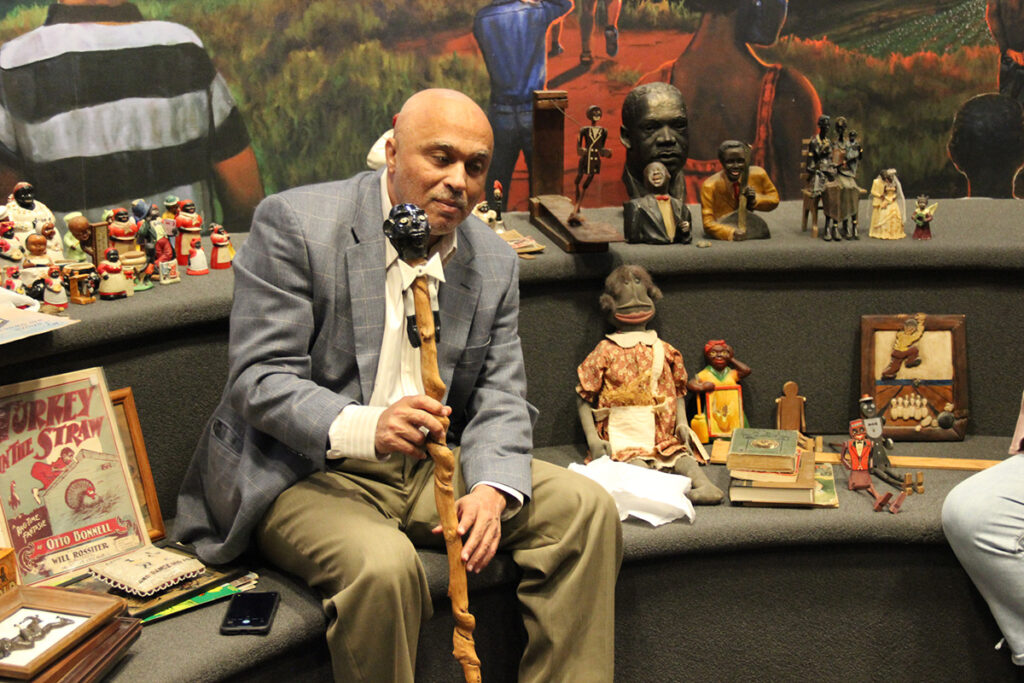
https://www.ferris.edu/HTMLS/news/jimcrow/collect.htm
Another example of collections that are in my opinion unethically sourced is those that hold artifacts and even human remains from indigenous groups. Most of these artifacts were seized by the colonizers who stole their land, thus making all of the artifacts stolen. As many museums around the world hold such artifacts it has been an ongoing battle to return them to their rightful owners. Laws and regulations have been put in place in the past there is still resistance. “NAGPRA, enacted in 1990 after being introduced by noted conservationist Morris Udall, requires organizations that receive federal funding to return Native American cultural artifacts to lineal descendants and affiliated tribes. Federal grant money is dedicated to repatriating artifacts which can be human remains, sacred objects, or personal possessions.” Though NAGPRA was enacted there was still push back from those in the educational arena. Arguments were made that returning these artifacts would take away valuable educational discoveries. The indigenous groups rebutted by saying they are capable of educating on their own history and it is not their right to tell them what is and isn’t sacred. Though preservation and education is important ethics are called into question when discussing the fact that these artifacts were seized without permission. From an Ethics standpoint, I believe reparations should be had and the human remains and artifacts should be returned to their tribes and communities of origin.
All this saying, collections are an important part of preserving our history and educating us about the past and how it connects to the present. The ethics however can be complicated, and when it comes to items that have great historical and cultural importance to a certain group or groups of people, it is important to go about collecting and preserving in a way that aligns with the needs of those communities.